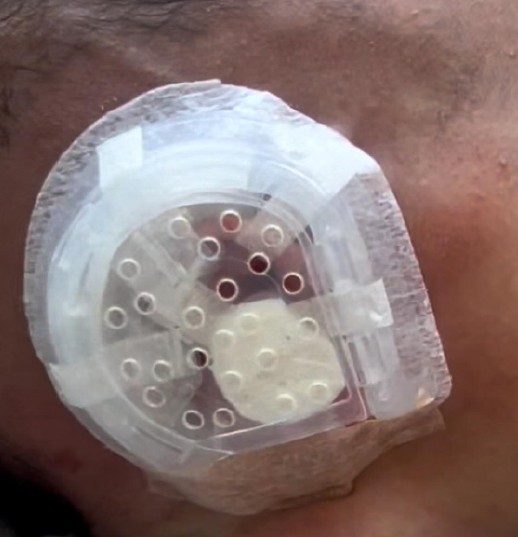
In clinic
About 30 minutes, physician-applied
Non-invasive placement with no anaesthesia. The family leaves the same visit. Wear time then follows the baby’s age at start.
For doctors · Become a provider
A physician-applied Class 1 set. Application takes about 30 minutes — no anaesthesia, no downtime. Train with our videos, or come to our Ankara centre when you are in Türkiye.
Apply to become a providerWhy clinics add the set
In clinic
Non-invasive placement with no anaesthesia. The family leaves the same visit. Wear time then follows the baby’s age at start.

Training
Start with our application training videos. When you come to our Hacettepe Teknokent centre in Ankara, we train you and your staff in person.

Referrals
Certified providers appear in our public directory so parents searching in your region can reach your clinic directly.
Indications
About 25% of newborns show an ear-shape difference at birth. Some of these settle in the first 10 days. Deformities that remain — about 3–5% of newborns — typically will not self-correct without intervention.
An ear that stands away from the head, or a cupped bowl that has not opened.
A folded or hooded helical rim that still looks wrong after the first 10 days.
An extra fold or pointed upper third that can be guided while cartilage is still soft.
A hidden upper pole, a flat rim, or mixed helical-shape differences.
Combined findings are planned in clinic after the physician names the deformity type.
How we train you
Physicians and distribution partners who want to work with the set can start with our application videos, then join hands-on training at our Ankara centre when they travel to Türkiye.
Step-by-step modules cover examination, kit placement, follow-up, and how to brief families. We share these with doctors and distributors who apply to work with CranioWell.
When you come to our centre at Hacettepe Teknokent, we train you and your clinical or field team in person — the same pathway we use with partner clinics today.
Practice support
Video modules for you and your staff, plus on-site workshops at our Ankara centre when you travel to Türkiye.
Single-patient, non-sterile kits for clinic use, with supply for application and follow-up visits.
Clinic brochures and digital explainers so new parents understand the first-weeks window.
After training, certified providers can be listed on Find a physician so parents in the region reach the clinic directly. The kit is single-patient and non-sterile, applied only by a physician.
Results
English clinical cards from CranioWell doctors. Each case was applied and followed in clinic — not at home. Individual results vary with age at start and deformity type.
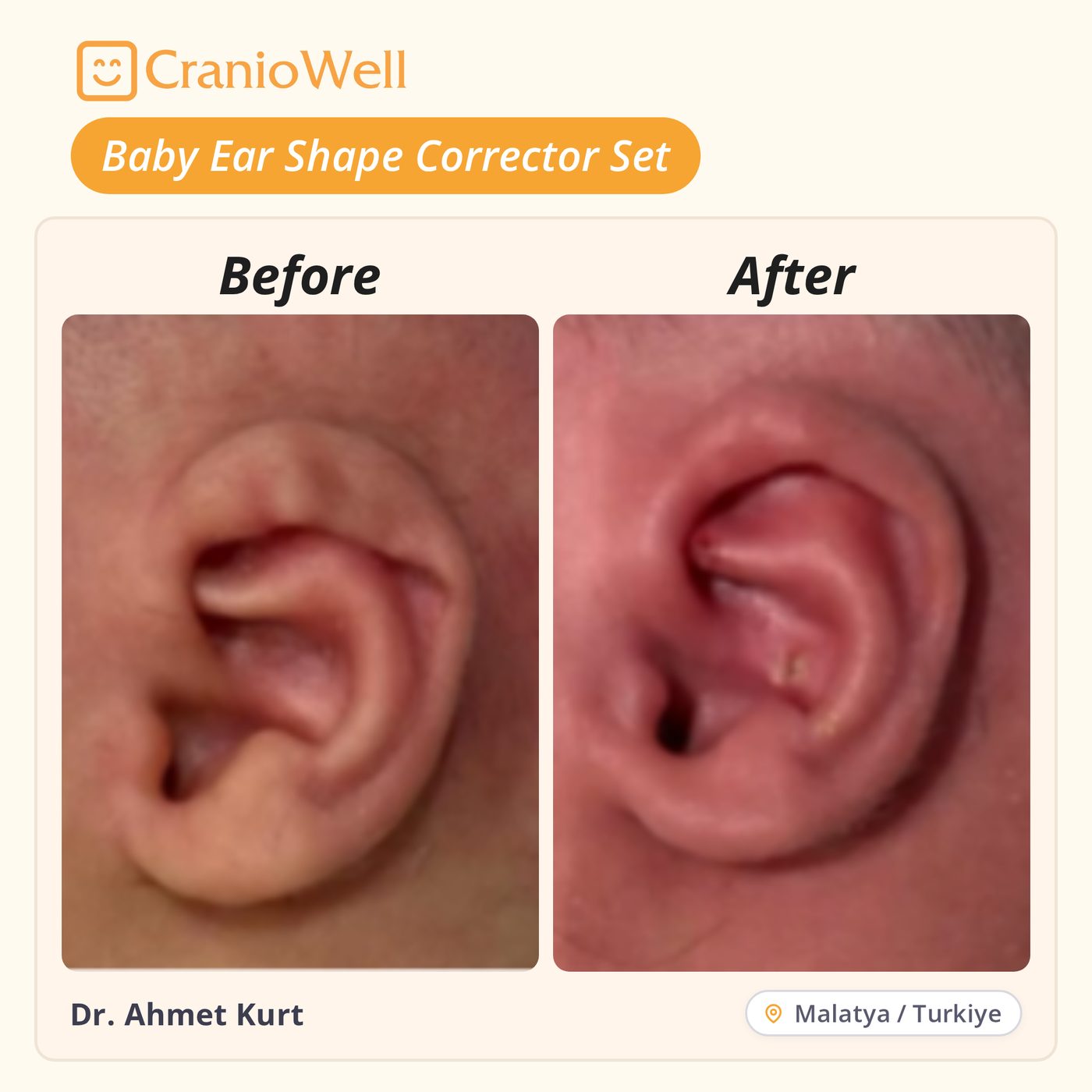
Dr. Ahmet Kurt
Malatya / Türkiye
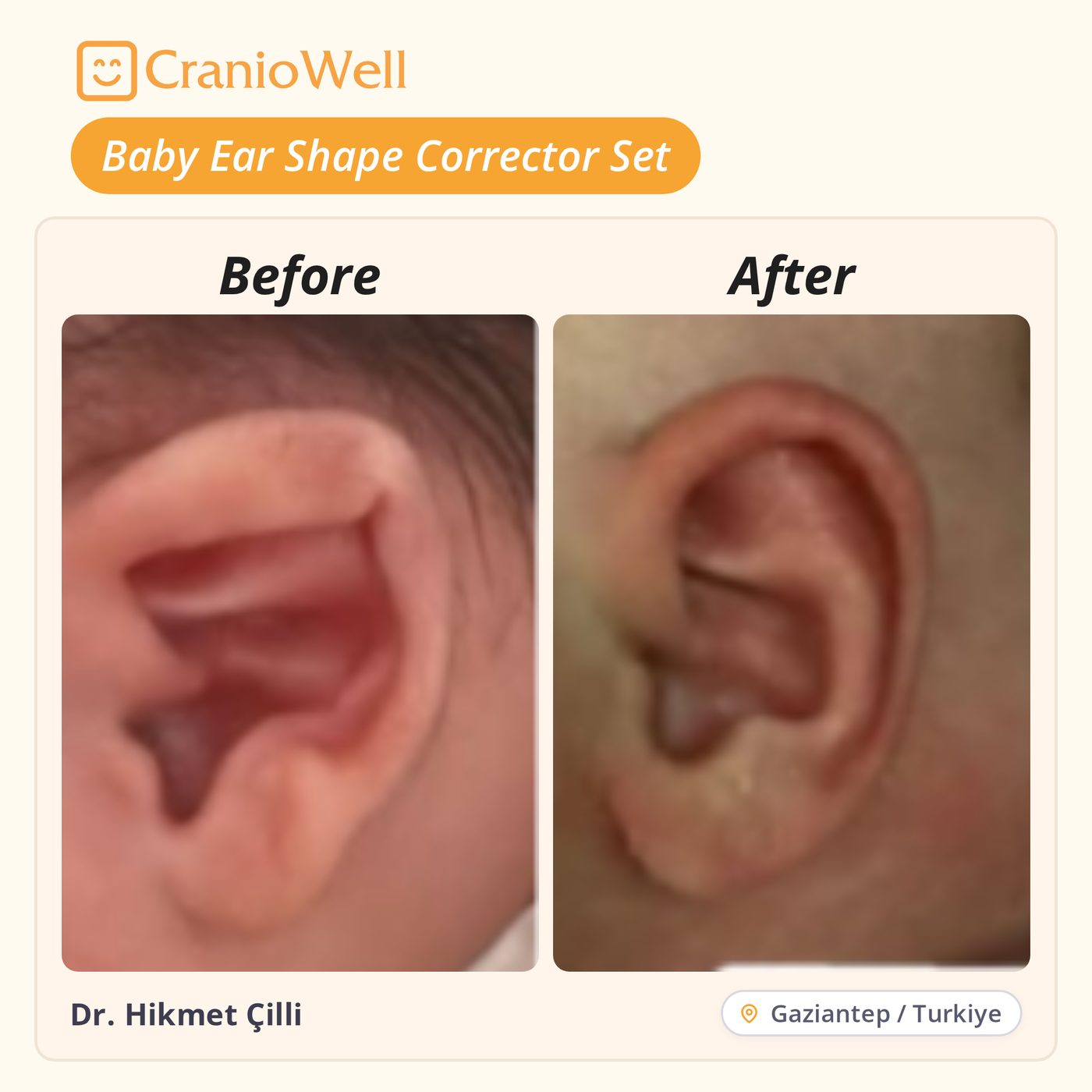
Dr. Hikmet Çilli
Gaziantep / Türkiye
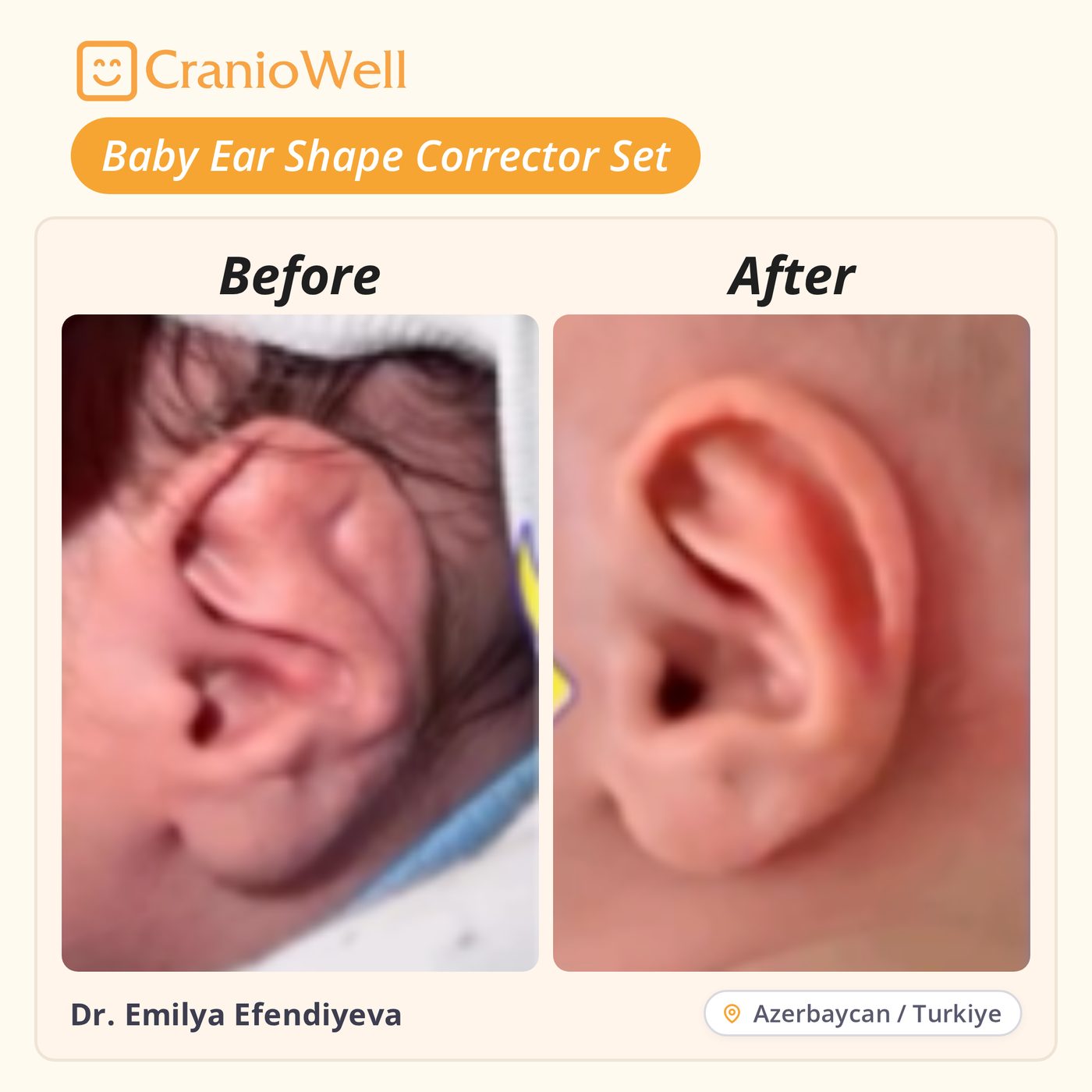
Dr. Emilya Efendiyeva
Azerbaijan / Azerbaijan
Pathway
01
Identify the ear deformity in the first days or weeks of life, while cartilage is still mouldable.
02
Wear time follows age at start: 3 weeks from 7–15 days of age, then 4, 5, 6, or 8 weeks as the infant is older.
03
Place the set in clinic and review regularly. Adjustments stay under your control.
Application
Application in clinic takes about 30 minutes. Molding is typically complete in about a month, with two or three follow-up visits — always under a physician.
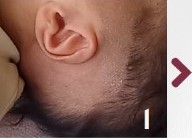
01
Hair around the ear is trimmed so tapes can adhere. The family is asked to wash the baby before the visit.
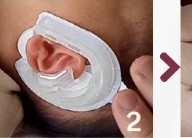
02
The main component is seated around the ear in an anatomically correct position.
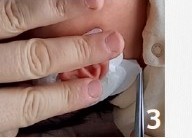
03
Adhesive backing is lifted and the base is secured to clean skin.
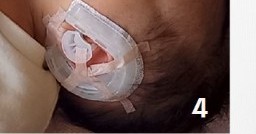
04
Helical and conchal correctors are added according to the deformity. A short trial-fit comes before final placement.
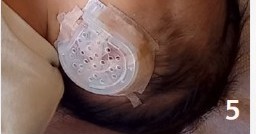
05
The perforated cap is closed. The ear stays visible and the canal stays open, so hearing continues.
From the user manual
Summary of the English Baby Ear Shaping Kit user manual (v2, 8 January 2025). The full IFU remains the reference for trained physicians.
Ask the family to wash the baby at home before the visit. In clinic, trim hair around the ear to about 2 cm, then wipe the skin and the main component with alcohol so tapes can adhere.
Seat the main component with the ear in an anatomically correct position. Add helical or conchal pieces by type and degree of deformity. Trial-fit the helical corrector; do not let it overlap the antihelix protrusion.
Remove the rear component for every child under 2 months of age. After 2 months, decide after measurement and evaluation. Hold the protruding area and pull it out slowly — do not use force.
Explain the procedure before you start. Side effects are uncommon. Ask them to check tapes and the ear from the outside every day. The main component and cap are transparent so the ear can be watched.
A slight odor from a closed ear environment can be normal. A strong or abnormal odor means the kit should be checked and removed if needed. Saliva or vomit under tapes can lead to infection — schedule regular checks.
Unusual crying or apparent pain: contact the doctor promptly. Slight tape lift: reinforce with micropore tape from the kit. If the main component comes off completely, the family should come in as soon as possible.
Quality
ISO 13485 for medical-device quality, plus 9001, 14001 and 45001 — issued to CranioWell Medikal at Hacettepe Teknokent, Ankara.
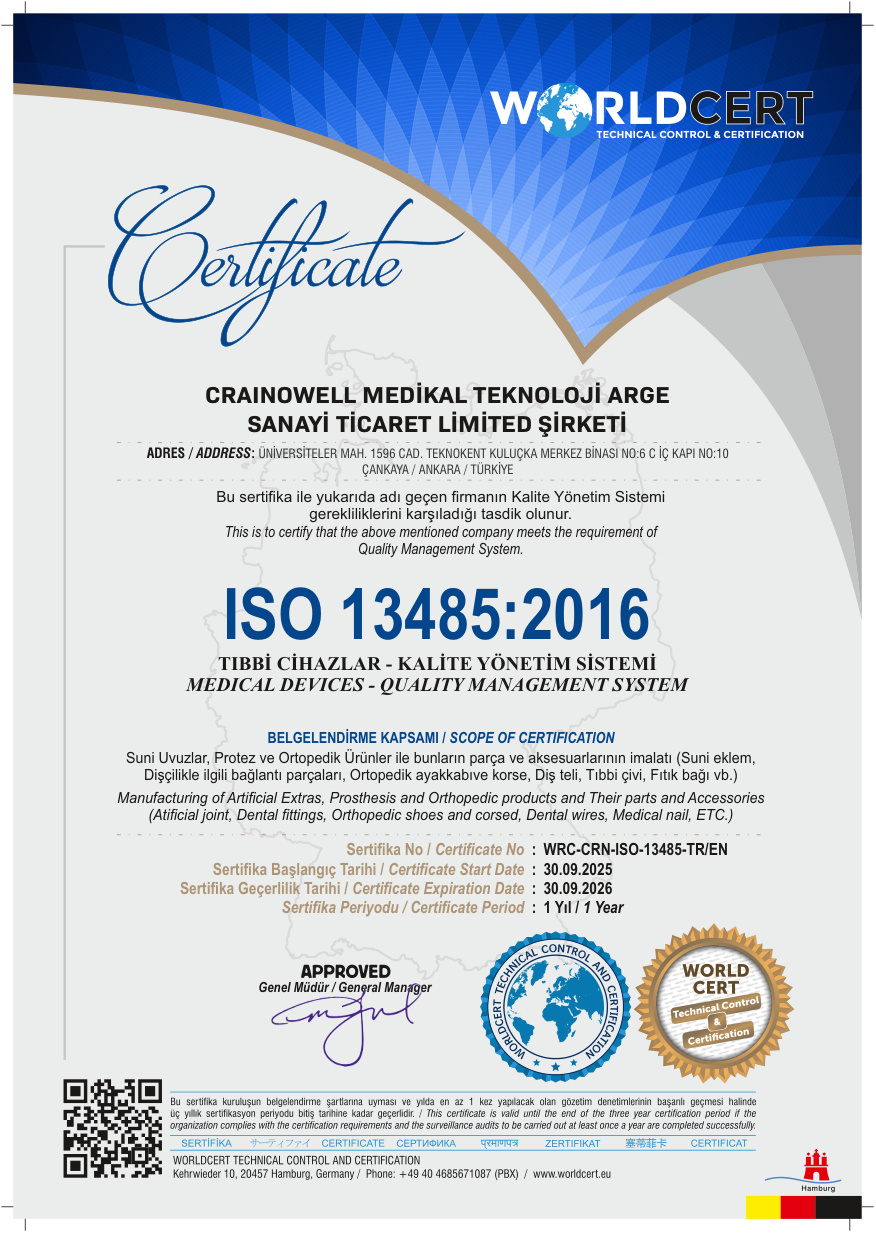
ISO 13485:2016
QMS for the manufacture of orthopedic and related medical products. Certificate no. WRC-CRN-ISO-13485-TR/EN. Valid through 30 September 2026.
Open PDF
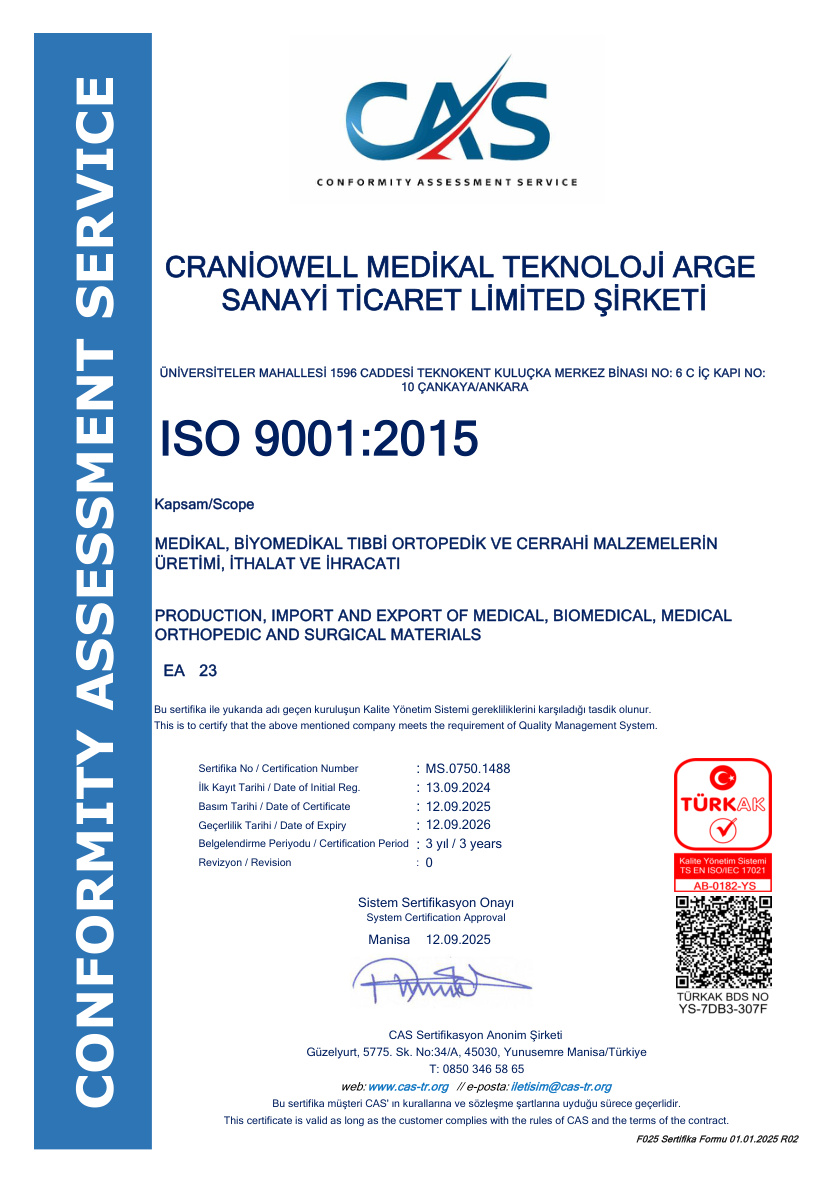
ISO 9001:2015
Production, import and export of medical, biomedical, orthopedic and surgical materials. CAS no. MS.0750.1488. Valid through 12 September 2026.
Open PDF
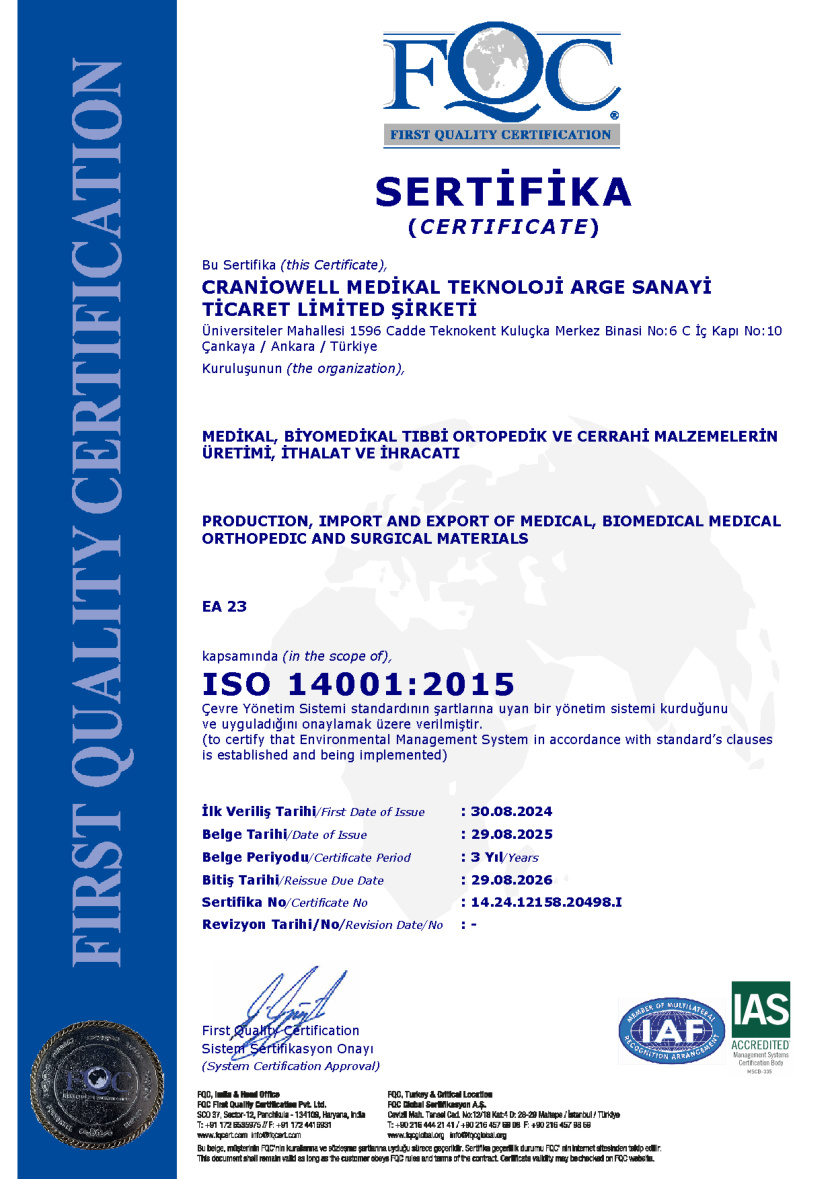
ISO 14001:2015
Environmental management system for the same medical manufacturing scope. FQC no. 14.24.12158.20498.I. Valid through 29 August 2026.
Open PDF
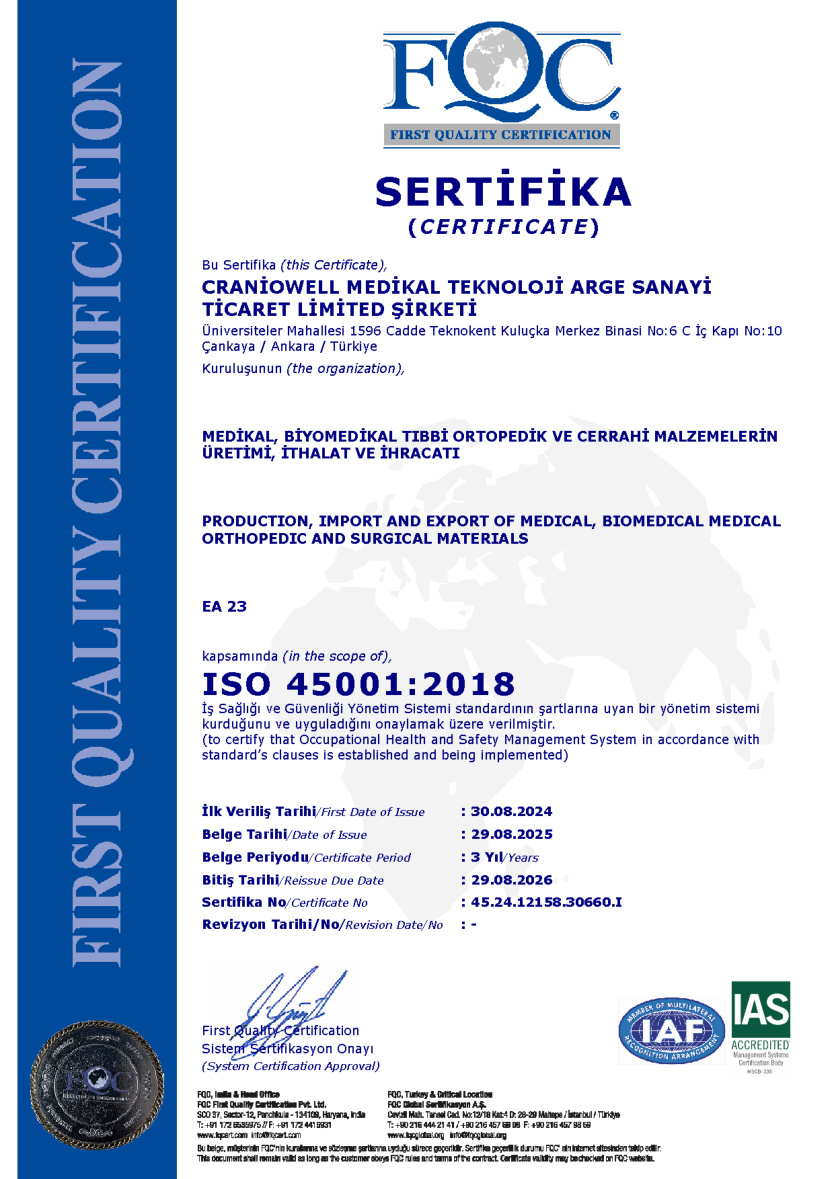
ISO 45001:2018
OH&S management system for medical manufacturing. FQC no. 45.24.12158.30660.I. Valid through 29 August 2026.
Open PDF
Become a provider
Tell us your clinic and how you prefer to train — application videos, an on-site workshop at our Ankara centre, or both. Application is physician-only.
Certifications & compliance
Class 1 medical device. CE marked. Quality system and national / EU device listings for hospital and ministry files.
Certificates (ISO PDFs) are available on the Certificates page. Patent registered with the Turkish Patent and Trademark Office. Origin: Hacettepe Teknokent, Ankara.
View certificates